AI for Business

Explore the best AI for Business — independent reviews, comparisons, pricing and step-by-step how-to guides, curated by Aizhi.

  • Developmental robotics

    Developmental robotics

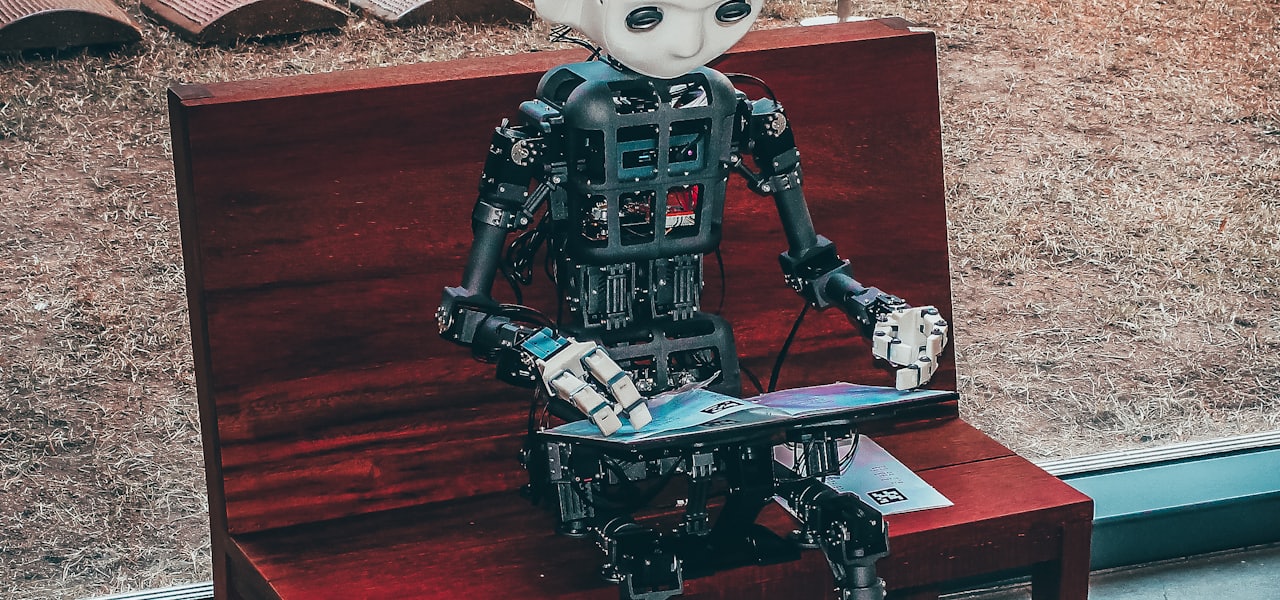
    Developmental robotics (DevRob), sometimes called epigenetic robotics, is a scientific field which aims at studying the developmental mechanisms, architectures and constraints that allow lifelong and open-ended learning of new skills and new knowledge in embodied machines. As in human children, learning is expected to be cumulative and of progressively increasing complexity, and to result from self-exploration of the world in combination with social interaction. The typical methodological approach consists in starting from theories of human and animal development elaborated in fields such as developmental psychology, neuroscience, developmental and evolutionary biology, and linguistics, then to formalize and implement them in robots, sometimes exploring extensions or variants of them. The experimentation of those models in robots allows researchers to confront them with reality, and as a consequence, developmental robotics also provides feedback and novel hypotheses on theories of human and animal development. Developmental robotics is related to but differs from evolutionary robotics (ER). ER uses populations of robots that evolve over time, whereas DevRob is interested in how the organization of a single robot's control system develops through experience, over time. DevRob is also related to work done in the domains of robotics and artificial life. == Background == Can a robot learn like a child? Can it learn a variety of new skills and new knowledge unspecified at design time and in a partially unknown and changing environment? How can it discover its body and its relationships with the physical and social environment? How can its cognitive capacities continuously develop without the intervention of an engineer once it is "out of the factory"? What can it learn through natural social interactions with humans? These are the questions at the center of developmental robotics. Alan Turing, as well as a number of other pioneers of cybernetics, already formulated those questions and the general approach in 1950, but it is only since the end of the 20th century that they began to be investigated systematically. Because the concept of adaptive intelligent machines is central to developmental robotics, it has relationships with fields such as artificial intelligence, machine learning, cognitive robotics or computational neuroscience. Yet, while it may reuse some of the techniques elaborated in these fields, it differs from them from many perspectives. It differs from classical artificial intelligence because it does not assume the capability of advanced symbolic reasoning and focuses on embodied and situated sensorimotor and social skills rather than on abstract symbolic problems. It differs from cognitive robotics because it focuses on the processes that allow the formation of cognitive capabilities rather than these capabilities themselves. It differs from computational neuroscience because it focuses on functional modeling of integrated architectures of development and learning. More generally, developmental robotics is uniquely characterized by the following three features: It targets task-independent architectures and learning mechanisms, i.e. the machine/robot has to be able to learn new tasks that are unknown by the engineer; It emphasizes open-ended development and lifelong learning, i.e. the capacity of an organism to acquire continuously novel skills. This should not be understood as a capacity for learning "anything" or even “everything”, but just that the set of skills that is acquired can be infinitely extended at least in some (not all) directions; The complexity of acquired knowledge and skills shall increase (and the increase be controlled) progressively. Developmental robotics emerged at the crossroads of several research communities including embodied artificial intelligence, enactive and dynamical systems cognitive science, connectionism. Starting from the essential idea that learning and development happen as the self-organized result of the dynamical interactions among brains, bodies and their physical and social environment, and trying to understand how this self-organization can be harnessed to provide task-independent lifelong learning of skills of increasing complexity, developmental robotics strongly interacts with fields such as developmental psychology, developmental and cognitive neuroscience, developmental biology (embryology), evolutionary biology, and cognitive linguistics. As many of the theories coming from these sciences are verbal and/or descriptive, this implies a crucial formalization and computational modeling activity in developmental robotics. These computational models are then not only used as ways to explore how to build more versatile and adaptive machines but also as a way to evaluate their coherence and possibly explore alternative explanations for understanding biological development. == Research directions == === Skill domains === Due to the general approach and methodology, developmental robotics projects typically focus on having robots develop the same types of skills as human infants. A first category that is important being investigated is the acquisition of sensorimotor skills. These include the discovery of one's own body, including its structure and dynamics such as hand-eye coordination, locomotion, and interaction with objects as well as tool use, with a particular focus on the discovery and learning of affordances. A second category of skills targeted by developmental robots are social and linguistic skills: the acquisition of simple social behavioural games such as turn-taking, coordinated interaction, lexicons, syntax and grammar, and the grounding of these linguistic skills into sensorimotor skills (sometimes referred as symbol grounding). In parallel, the acquisition of associated cognitive skills are being investigated such as the emergence of the self/non-self distinction, the development of attentional capabilities, of categorization systems and higher-level representations of affordances or social constructs, of the emergence of values, empathy, or theories of mind. === Mechanisms and constraints === The sensorimotor and social spaces in which humans and robot live are so large and complex that only a small part of potentially learnable skills can actually be explored and learnt within a life-time. Thus, mechanisms and constraints are necessary to guide developmental organisms in their development and control of the growth of complexity. There are several important families of these guiding mechanisms and constraints which are studied in developmental robotics, all inspired by human development: Motivational systems, generating internal reward signals that drive exploration and learning, which can be of two main types: extrinsic motivations push robots/organisms to maintain basic specific internal properties such as food and water level, physical integrity, or light (e.g. in phototropic systems); intrinsic motivations push robot to search for novelty, challenge, compression or learning progress per se, thus generating what is sometimes called curiosity-driven learning and exploration, or alternatively active learning and exploration; Social guidance: as humans learn a lot by interacting with their peers, developmental robotics investigates mechanisms that can allow robots to participate to human-like social interaction. By perceiving and interpreting social cues, this may allow robots both to learn from humans (through diverse means such as imitation, emulation, stimulus enhancement, demonstration, etc. ...) and to trigger natural human pedagogy. Thus, social acceptance of developmental robots is also investigated; Statistical inference biases and cumulative knowledge/skill reuse: biases characterizing both representations/encodings and inference mechanisms can typically allow considerable improvement of the efficiency of learning and are thus studied. Related to this, mechanisms allowing to infer new knowledge and acquire new skills by reusing previously learnt structures is also an essential field of study; The properties of embodiment, including geometry, materials, or innate motor primitives/synergies often encoded as dynamical systems, can considerably simplify the acquisition of sensorimotor or social skills, and is sometimes referred as morphological computation. The interaction of these constraints with other constraints is an important axis of investigation; Maturational constraints: In human infants, both the body and the neural system grow progressively, rather than being full-fledged already at birth. This implies, for example, that new degrees of freedom, as well as increases of the volume and resolution of available sensorimotor signals, may appear as learning and development unfold. Transposing these mechanisms in developmental robots, and understanding how it may hinder or on the contrary ease the acquisition of novel complex skills is a central questi

    Read more →
  • Kaggle

    Kaggle

    Kaggle is a data science competition platform and online community for data scientists and machine learning practitioners under Google LLC. Kaggle enables users to find and publish datasets, explore and build models in a web-based data science environment, work with other data scientists and machine learning engineers, and enter competitions to solve data science challenges. Kaggle has also facilitated the use of unethical and unreliable data in medical research. == History == Kaggle was founded by Anthony Goldbloom in April 2010. Jeremy Howard, one of the first Kaggle users, joined in November 2010 and served as the President and Chief Scientist. Also on the team was Nicholas Gruen serving as the founding chair. In 2011, the company raised $12.5 million and Max Levchin became the chairman. On March 8, 2017, Fei-Fei Li, Chief Scientist at Google, announced that Google was acquiring Kaggle. In June 2017, Kaggle surpassed 1 million registered users, and as of October 2023, it has over 15 million users in 194 countries. In 2022, founders Goldbloom and Hamner stepped down from their positions and D. Sculley became the CEO. In February 2023, Kaggle introduced Models, allowing users to discover and use pre-trained models through deep integrations with the rest of Kaggle’s platform. In April 2025, Kaggle partnered with Wikimedia Foundation. == Site overview == === Competitions === Many machine-learning competitions have been run on Kaggle since the company was founded. Notable competitions include gesture recognition for Microsoft Kinect, making a association football AI for Manchester City, coding a trading algorithm for Two Sigma Investments, and improving the search for the Higgs boson at CERN. The competition host prepares the data and a description of the problem; the host may choose whether it's going to be rewarded with money or be unpaid. Participants experiment with different techniques and compete against each other to produce the best models. Work is shared publicly through Kaggle Kernels to achieve a better benchmark and to inspire new ideas. Submissions can be made through Kaggle Kernels, via manual upload or using the Kaggle API. For most competitions, submissions are scored immediately (based on their predictive accuracy relative to a hidden solution file) and summarized on a live leaderboard. After the deadline passes, the competition host pays the prize money in exchange for "a worldwide, perpetual, irrevocable and royalty-free license [...] to use the winning Entry", i.e. the algorithm, software and related intellectual property developed, which is "non-exclusive unless otherwise specified". Alongside its public competitions, Kaggle also offers private competitions, which are limited to Kaggle's top participants. Kaggle offers a free tool for data science teachers to run academic machine-learning competitions. Kaggle also hosts recruiting competitions in which data scientists compete for a chance to interview at leading data science companies like Facebook, Winton Capital, and Walmart. Kaggle's competitions have resulted in successful projects such as furthering HIV research, chess ratings and traffic forecasting. Geoffrey Hinton and George Dahl used deep neural networks to win a competition hosted by Merck. Vlad Mnih (one of Hinton's students) used deep neural networks to win a competition hosted by Adzuna. This resulted in the technique being taken up by others in the Kaggle community. Tianqi Chen from the University of Washington also used Kaggle to show the power of XGBoost, which has since replaced Random Forest as one of the main methods used to win Kaggle competitions. Several academic papers have been published based on findings from Kaggle competitions. A contributor to this is the live leaderboard, which encourages participants to continue innovating beyond existing best practices. The winning methods are frequently written on the Kaggle Winner's Blog. === Progression system === Kaggle has implemented a progression system to recognize and reward users based on their contributions and achievements within the platform. This system consists of five tiers: Novice, Contributor, Expert, Master, and Grandmaster. Each tier is achieved by meeting specific criteria in competitions, datasets, kernels (code-sharing), and discussions. The highest tier, Kaggle Grandmaster, is awarded to users who have ranked at the top of multiple competitions including high ranking in a solo team. As of April 2, 2025, out of 23.29 million Kaggle accounts, 2,973 have achieved Kaggle Master status and 612 have achieved Kaggle Grandmaster status. === Kaggle Notebooks === Kaggle includes a free, browser-based online integrated development environment, called Kaggle Notebooks, designed for data science and machine learning. Users can write and execute code in Python or R, import datasets, use popular libraries, and train models on CPUs, GPUs, or TPUs directly in the cloud. This environment is often used for competition submissions, tutorials, education, and exploratory data analysis. == Medical Research Problems == In December 2025, an article was published in The Transmitter titled "Exclusive: Springer Nature retracts, removes nearly 40 publications that trained neural networks on ‘bonkers’ dataset". The dataset in question was uploaded to Kaggle containing photographs of autistic and non-autistic children's faces. This dataset contained more than 2,900 images and it is unlikely that these children or their families gave consent for the photos for use in medical research or the images were ethically approved for research. The articles using the dataset in Springer Nature were retracted from the scientific literature. At least 90 other publications cite a version of the dataset. In April 2026, another two datasets were identified on Kaggle with no data provenance having been published in Nature titled: "Dozens of AI disease-prediction models were trained on dubious data". These datasets were used in 124 clinical prediction models, at least two of which have been used in hospitals in Indonesia and Spain, while one article using the dataset was referenced in a medical device patent. As of April 17, 2026, three of the articles using these datasets have been retracted from the scientific literature. In May 2026, an additional research publication using two image datasets from Kaggle is under investigation in Scientific Reports. An article in Retraction Watch "‘Comically bad’ datasets used to train clinical models for stroke and diabetes" highlighted the images included famous actors such as Sylvester Stallone as Rambo, George Clooney, Angelina Jolie and Daniel Craig as well as children. It would be unethical for the use of these child images in medical research without consent. Reverse searching images saw some of the images were not for stroke but for bell's palsy. One of the datasets is no longer available on Kaggle while the other one still remains and mentions the images may be subject to copyright. Kaggle relies on the community self-reporting metadata and provenance and mentions the stroke and diabetes dataset identified in "Evidence of unreliable data and poor data provenance in clinical prediction model research and clinical practice" does not violate their terms of service and they would have been removed if they had.

    Read more →
  • DreamBooth

    DreamBooth

    DreamBooth is a deep learning generation model used to personalize existing text-to-image models by fine-tuning. It was developed by researchers from Google Research and Boston University in 2022. Originally developed using Google's own Imagen text-to-image model, DreamBooth implementations can be applied to other text-to-image models, where it can allow the model to generate more fine-tuned and personalized outputs after training on three to five images of a subject. == Technology == Pretrained text-to-image diffusion models, while often capable of offering a diverse range of different image output types, lack the specificity required to generate images of lesser-known subjects, and are limited in their ability to render known subjects in different situations and contexts. The methodology used to run implementations of DreamBooth involves the fine-tuning the full UNet component of the diffusion model using a few images (usually 3--5) depicting a specific subject. Images are paired with text prompts that contain the name of the class the subject belongs to, plus a unique identifier. As an example, a photograph of a [Nissan R34 GTR] car, with car being the class); a class-specific prior preservation loss is applied to encourage the model to generate diverse instances of the subject based on what the model is already trained on for the original class. Pairs of low-resolution and high-resolution images taken from the set of input images are used to fine-tune the super-resolution components, allowing the minute details of the subject to be maintained. == Usage == DreamBooth can be used to fine-tune models such as Stable Diffusion, where it may alleviate a common shortcoming of Stable Diffusion not being able to adequately generate images of specific individual people. Such a use case is quite VRAM intensive, however, and thus cost-prohibitive for hobbyist users. The Stable Diffusion adaptation of DreamBooth in particular is released as a free and open-source project based on the technology outlined by the original paper published by Ruiz et. al. in 2022. Concerns have been raised regarding the ability for bad actors to utilise DreamBooth to generate misleading images for malicious purposes, and that its open-source nature allows anyone to utilise or even make improvements to the technology. In addition, artists have expressed their apprehension regarding the ethics of using DreamBooth to train model checkpoints that are specifically aimed at imitating specific art styles associated with human artists; one such critic is Hollie Mengert, an illustrator for Disney and Penguin Random House who has had her art style trained into a checkpoint model via DreamBooth and shared online, without her consent.

    Read more →
  • Mustafa Suleyman

    Mustafa Suleyman

    Mustafa Suleyman (born in August 1984) is a British artificial intelligence (AI) entrepreneur. He is the CEO of Microsoft AI, and the co-founder and former head of applied AI at DeepMind, an AI company which was acquired by Google. After leaving DeepMind, he co-founded Inflection AI, a machine learning and generative AI company, in 2022. == Early life and education == Suleyman's Syrian father worked as a taxi driver and his English mother was a nurse. He grew up off Caledonian Road, London, where he lived with his parents and his two younger brothers. Suleyman went to Thornhill Primary School, a state school in Islington, followed by Queen Elizabeth's School, Barnet, a boys' grammar school. Around that time, he met his DeepMind co-founder, Demis Hassabis, through his best friend, who was Demis's younger brother. Suleyman shared that he and Hassabis often discussed how they could make a positive impact on the world. Suleyman enrolled to study philosophy and theology at the University of Oxford where he was an undergraduate student at Mansfield College, Oxford, before dropping out at 19. == Career == In August 2001, while still a teenager and a "strong atheist", Suleyman helped Mohammed Mamdani establish a telephone counselling service called the Muslim Youth Helpline. The organization would later become one of the largest mental health support services. Suleyman subsequently worked as a policy officer on human rights for Ken Livingstone, the Mayor of London, before going on to start Reos Partners, a "systemic change" consultancy that uses methods from conflict resolution to navigate social problems. As a negotiator and facilitator, Mustafa worked for a wide range of clients such as the United Nations, the Dutch government, and the World Wide Fund for Nature. === DeepMind and Google === In 2010 Suleyman co-founded DeepMind Technologies, an artificial intelligence (AI) and machine learning company, and became its chief product officer. The company quickly established itself as one of the leaders in the AI sector. In 2014 DeepMind was acquired by Google for a reported £400 million, the company's largest acquisition in Europe at that time. Following the acquisition, Suleyman became head of applied AI at DeepMind, taking on responsibility for integrating the company's technology across a wide range of Google products. In February 2016 Suleyman launched DeepMind Health at the Royal Society of Medicine. DeepMind Health builds clinician-led technology for the National Health Service (NHS) and other partners to improve frontline healthcare services. Under Suleyman, DeepMind also developed research collaborations with healthcare organizations in the United Kingdom, including Moorfields Eye Hospital NHS foundation trust. In 2016, Suleyman led an effort to apply DeepMind's machine learning algorithms to help reduce the energy required to cool Google's data centres. The system evaluated the billions of possible combinations of actions that the data centre operators could take, and came up with recommendations based on the predicted power usage. The system discovered novel methods of cooling, leading to a reduction of up to 40% of the amount of energy used for cooling, and a 15% improvement in the buildings' overall energy efficiency. Since June 2019, Suleyman has served on the board of The Economist Group, which publishes The Economist newspaper. In August 2019, Suleyman was placed on administrative leave following allegations of bullying employees. The company hired an external lawyer to investigate, and shortly thereafter Suleyman left to take a VP role at parent company Google. An email circulated by DeepMind's leadership to staff after the story broke, as well as additional details published by Business Insider, said Suleyman's "management style fell short" of expected standards. In December 2019, Suleyman announced he would be leaving DeepMind to join Google, working in a policy role. === Inflection AI === Suleyman left Google in January 2022 and joined Greylock Partners as a venture partner and in March 2022, Suleyman co-founded Inflection AI, a new AI lab venture with Greylock's Reid Hoffman. The company was founded with the goal of leveraging "AI to help humans 'talk' to computers," recruited former staff from companies such as Google and Meta and raised $225 million in its first funding round. In 2023, Inflection AI launched a chatbot named “Pi” for Personal Intelligence. The bot “remembers” past conversations and seems to get to know its users over time. According to Suleyman, the long-term goal for Pi is to be a digital “Chief of Staff”, with the initial design focused on maintaining conversational dialogue with users, asking questions, and offering emotional support. === Microsoft AI === In March 2024, Microsoft appointed Suleyman as Executive Vice President (EVP) and CEO of its newly created consumer AI unit, Microsoft AI. Several members of Inflection AI's team were also appointed to the division, including co-founder Karen Simonyan. === Awards and honours === Suleyman was appointed a Commander of the British Empire (CBE) in the 2019 New Year Honours. Suleyman was named by Time as one of the 100 most influential people in artificial intelligence in 2023 and in 2024. === Views on AI ethics === Suleyman is prominent in the debate over the ethics of AI and has spoken widely about the need for companies, governments and civil society to join in holding technologists accountable for the impacts of their work. He has advocated redesigning incentives in the technology industry to steer business leaders toward prioritising social responsibility alongside their fiduciary duties. Within DeepMind he set up a research unit called DeepMind Ethics & Society to study the real-world impacts of AI and help technologists put ethics into practice. Suleyman is also a founding co-chair of the Partnership on AI – an organisation that includes representatives from companies such as Amazon, Apple, DeepMind, Meta, Google, IBM, and Microsoft. The organisation studies and formulates best practices for AI technologies, advances the public's understanding of AI, and serves as an open platform for discussion and engagement about AI and how it affects people and society. Its board of directors has equal representation from non-profit and for profit entities. In September 2023, Suleyman, in collaboration with researcher Michael Bhaskar, published The Coming Wave, Technology, Power and the 21st Century's Greatest Dilemma, a book that examines the transformative and potentially perilous impact of advanced technologies, particularly AI and synthetic biology. According to Suleyman, AI notably has the potential to bring "radical abundance", address climate change and empower people with its cheap problem-solving capabilities. But it may also improve its own design and manufacturing processes, leading to a period of dangerously rapid AI progress. And it could enable catastrophic misuse, from bioengineered pathogens to autonomous weapons, making global oversight and containment essential to avoid unintended consequences. It was shortlisted for the 2023 Financial Times Business Book of the Year Award. In June 2024, in an interview with Andrew Ross Sorkin at the Aspen Ideas Festival, Suleyman expressed the view that unless a website explicitly specifies otherwise, for "content that is already on the open web, the social contract of that content since the 90s has been that it is fair use. Anyone can copy it, recreate with it, reproduce with it. That has been freeware, if you like. That's been the understanding." The statement sparked controversy over the use of Internet data for training AI models. == Personal life == A Business Insider profile in 2017 described Suleyman as being liberal.

    Read more →
  • Tango (platform)

    Tango (platform)

    Tango (named Project Tango while in testing) was an augmented reality computing platform, developed and authored by the Advanced Technology and Projects (ATAP), a skunkworks division of Google. It used computer vision to enable mobile devices, such as smartphones and tablets, to detect their position relative to the world around them without using GPS or other external signals. This allowed application developers to create user experiences that include indoor navigation, 3D mapping, physical space measurement, environmental recognition, augmented reality, and windows into a virtual world. The first product to emerge from ATAP, Tango was developed by a team led by computer scientist Johnny Lee, a core contributor to Microsoft's Kinect. In an interview in June 2015, Lee said, "We're developing the hardware and software technologies to help everything and everyone understand precisely where they are, anywhere." Google produced two devices to demonstrate the Tango technology: the Peanut phone and the Yellowstone 7-inch tablet. More than 3,000 of these devices had been sold as of June 2015, chiefly to researchers and software developers interested in building applications for the platform. In the summer of 2015, Qualcomm and Intel both announced that they were developing Tango reference devices as models for device manufacturers who use their mobile chipsets. At CES, in January 2016, Google announced a partnership with Lenovo to release a consumer smartphone during the summer of 2016 to feature Tango technology marketed at consumers, noting a less than $500 price-point and a small form factor below 6.5 inches. At the same time, both companies also announced an application incubator to get applications developed to be on the device on launch. On 15 December 2017, Google announced that they would be ending support for Tango on March 1, 2018, in favor of ARCore. == Overview == Tango was different from other contemporary 3D-sensing computer vision products, in that it was designed to run on a standalone mobile phone or tablet and was chiefly concerned with determining the device's position and orientation within the environment. The software worked by integrating three types of functionality: Motion-tracking: using visual features of the environment, in combination with accelerometer and gyroscope data, to closely track the device's movements in space Area learning: storing environment data in a map that can be re-used later, shared with other Tango devices, and enhanced with metadata such as notes, instructions, or points of interest Depth perception: detecting distances, sizes, and surfaces in the environment Together, these generate data about the device in "six degrees of freedom" (3 axes of orientation plus 3 axes of position) and detailed three-dimensional information about the environment. Project Tango was also the first project to graduate from Google X in 2012 Applications on mobile devices use Tango's C and Java APIs to access this data in real time. In addition, an API was also provided for integrating Tango with the Unity game engine; this enabled the conversion or creation of games that allow the user to interact and navigate in the game space by moving and rotating a Tango device in real space. These APIs were documented on the Google developer website. == Applications == Tango enabled apps to track a device's position and orientation within a detailed 3D environment, and to recognize known environments. This allowed the creations of applications such as in-store navigation, visual measurement and mapping utilities, presentation and design tools, and a variety of immersive games. At Augmented World Expo 2015, Johnny Lee demonstrated a construction game that builds a virtual structure in real space, an AR showroom app that allows users to view a full-size virtual automobile and customize its features, a hybrid Nerf gun with mounted Tango screen for dodging and shooting AR monsters superimposed on reality, and a multiplayer VR app that lets multiple players converse in a virtual space where their avatar movements match their real-life movements. Tango apps are distributed through Play. Google has encouraged the development of more apps with hackathons, an app contest, and promotional discounts on the development tablet. == Devices == As a platform for software developers and a model for device manufacturers, Google created two Tango devices. === The Peanut phone === "Peanut" was the first production Tango device, released in the first quarter of 2014. It was a small Android phone with a Qualcomm MSM8974 quad-core processor and additional special hardware including a fisheye motion camera, "RGB-IR" camera for color image and infrared depth detection, and Movidius Vision processing units. A high-performance accelerometer and gyroscope were added after testing several competing models in the MARS lab at the University of Minnesota. Several hundred Peanut devices were distributed to early-access partners including university researchers in computer vision and robotics, as well as application developers and technology startups. Google stopped supporting the Peanut device in September 2015, as by then the Tango software stack had evolved beyond the versions of Android that run on the device. === The Yellowstone tablet === "Yellowstone" was a 7-inch tablet with full Tango functionality, released in June 2014, and sold as the Project Tango Tablet Development Kit. It featured a 2.3 GHz quad-core Nvidia Tegra K1 processor, 128GB flash memory, 1920x1200-pixel touchscreen, 4MP color camera, fisheye-lens (motion-tracking) camera, an IR projector with RGB-IR camera for integrated depth sensing, and 4G LTE connectivity. As of May 27, 2017, the Tango tablet is considered officially unsupported by Google. ==== Testing by NASA ==== In May 2014, two Peanut phones were delivered to the International Space Station to be part of a NASA project to develop autonomous robots that navigate in a variety of environments, including outer space. The soccer-ball-sized, 18-sided polyhedral SPHERES robots were developed at the NASA Ames Research Center, adjacent to the Google campus in Mountain View, California. Andres Martinez, SPHERES manager at NASA, said "We are researching how effective [Tango's] vision-based navigation abilities are for performing localization and navigation of a mobile free flyer on ISS. === Intel RealSense smartphone === Announced at Intel's Developer Forum in August 2015, and offered to public through a Developer Kit since January 2016. It incorporated a RealSense ZR300 camera which had optical features required for Tango, such as the fisheye camera. === Lenovo Phab 2 Pro === Lenovo Phab 2 Pro was the first commercial smartphone with the Tango Technology, the device was announced at the beginning of 2016, launched in August, and available for purchase in the US in November. The Phab 2 Pro had a 6.4 inch screen, a Snapdragon 652 processor, and 64 GB of internal storage, with a rear facing 16 Megapixels camera and 8 MP front camera. === Asus Zenfone AR === Asus Zenfone AR, announced at CES 2017, was the second commercial smartphone with the Tango Technology. It ran Tango AR & Daydream VR on Snapdragon 821, with 6GB or 8GB of RAM and 128 or 256GB of internal memory depending on the configuration.

    Read more →
  • Frame (artificial intelligence)

    Frame (artificial intelligence)

    Frames are an artificial intelligence data structure used to divide knowledge into substructures by representing "stereotyped situations". They were proposed by Marvin Minsky in his 1974 article "A Framework for Representing Knowledge". Frames are the primary data structure used in artificial intelligence frame languages; they are stored as ontologies of sets. Frames are also an extensive part of knowledge representation and reasoning schemes. They were originally derived from semantic networks and are therefore part of structure-based knowledge representations. According to Russell and Norvig's Artificial Intelligence: A Modern Approach, structural representations assemble "facts about particular object and event types and [arrange] the types into a large taxonomic hierarchy analogous to a biological taxonomy". == Frame structure == The frame contains information on how to use the frame, what to expect next, and what to do when these expectations are not met. Some information in the frame is generally unchanged while other information, stored in "terminals", usually change. Terminals can be considered as variables. Top-level frames carry information, that is always true about the problem in hand, however, terminals do not have to be true. Their value might change with the new information encountered. Different frames may share the same terminals. Each piece of information about a particular frame is held in a slot. The information can contain: Facts or Data Values (called facets) Procedures (also called procedural attachments) IF-NEEDED: deferred evaluation IF-ADDED: updates linked information Default Values For Data For Procedures Other Frames or Subframes == Features and advantages == A frame's terminals are already filled with default values, which is based on how the human mind works. For example, when a person is told "a boy kicks a ball", most people will visualize a particular ball (such as a familiar soccer ball) rather than imagining some abstract ball with no attributes. One particular strength of frame-based knowledge representations is that, unlike semantic networks, they allow for exceptions in particular instances. This gives frames a degree of flexibility that allows representations to reflect real-world phenomena more accurately. Like semantic networks, frames can be queried using spreading activation. Following the rules of inheritance, any value given to a slot that is inherited by subframes will be updated (IF-ADDED) to the corresponding slots in the subframes and any new instances of a particular frame will feature that new value as the default. Because frames are based on structures, it is possible to generate a semantic network given a set of frames even though it lacks explicit arcs. References to Noam Chomsky and his generative grammar of 1950 are generally missing from Minsky's work. The simplified structures of frames allow for easy analogical reasoning, a much prized feature in any intelligent agent. The procedural attachments provided by frames also allow a degree of flexibility that makes for a more realistic representation and gives a natural affordance for programming applications. == Example == Worth noticing here is the easy analogical reasoning (comparison) that can be done between a boy and a monkey just by having similarly named slots. Also notice that Alex, an instance of a boy, inherits default values like "Sex" from the more general parent object Boy, but the boy may also have different instance values in the form of exceptions such as the number of legs. == Frame language == A frame language is a technology used for knowledge representation in artificial intelligence. They are similar to class hierarchies in object-oriented languages although their fundamental design goals are different. Frames are focused on explicit and intuitive representation of knowledge whereas objects focus on encapsulation and information hiding. Frames originated in AI research and objects primarily in software engineering. However, in practice, the techniques and capabilities of frame and object-oriented languages overlap significantly. === Example === A simple example of concepts modeled in a frame language is the Friend of A Friend (FOAF) ontology defined as part of the Semantic Web as a foundation for social networking and calendar systems. The primary frame in this simple example is a Person. Example slots are the person's email, home page, phone, etc. The interests of each person can be represented by additional frames describing the space of business and entertainment domains. The slot knows links each person with other persons. Default values for a person's interests can be inferred by the web of people they are friends of. === Implementations === The earliest frame-based languages were custom developed for specific research projects and were not packaged as tools to be re-used by other researchers. Just as with expert system inference engines, researchers soon realized the benefits of extracting part of the core infrastructure and developing general-purpose frame languages that were not coupled to specific applications. One of the first general-purpose frame languages was KRL. One of the most influential early frame languages was KL-ONE. KL-ONE spawned several subsequent Frame languages. One of the most widely used successors to KL-ONE was the Loom language developed by Robert MacGregor at the Information Sciences Institute. In the 1980s, Artificial Intelligence generated a great deal of interest in the business world fueled by expert systems. This led to the development of many commercial products for the development of knowledge-based systems. These early products were usually developed in Lisp and integrated constructs such as IF-THEN rules for logical reasoning with Frame hierarchies for representing data. One of the most well known of these early Lisp knowledge-base tools was the Knowledge Engineering Environment (KEE) from Intellicorp. KEE provided a full Frame language with multiple inheritance, slots, triggers, default values, and a rule engine that supported backward and forward chaining. As with most early commercial versions of AI software KEE was originally deployed in Lisp on Lisp machine platforms but was eventually ported to PCs and Unix workstations. The research agenda of the Semantic Web spawned a renewed interest in automatic classification and frame languages. An example is the Web Ontology Language (OWL) standard for describing information on the Internet. OWL is a standard to provide a semantic layer on top of the Internet. The goal is that rather than searching the web using keywords as most search engines (e.g. Google) do today, the web can be organized by concepts organized in an ontology, like a directory structure. The name of the OWL language itself provides a good example of the value of a Semantic Web. If one were to search for "OWL" using the Internet today most of the pages retrieved would be on the bird Owl rather than the standard OWL. With a Semantic Web it would be possible to specify the concept "Web Ontology Language" and the user would not need to worry about the various possible acronyms or synonyms as part of the search. Likewise, the user would not need to worry about homonyms crowding the search results with irrelevant data such as information about birds of prey as in this simple example. In addition to OWL, various standards and technologies that are relevant to the Semantic Web and were influenced by Frame languages include OIL and DAML. The Protege Open Source software tool from Stanford University provides an ontology editing capability that is built on OWL and has the full capabilities of a classifier. However it ceased to explicitly support frames as of version 3.5 (which is maintained for those preferring frame orientation), with the current version being 5.6.8 as of 2025. The justification for moving from explicit frames being that OWL DL is more expressive and "industry standard". === Comparison of frames and objects === Frame languages have a significant overlap with object-oriented languages. The terminologies and goals of the two communities were different but as they moved from the academic world and labs to the commercial world developers tended to not care about philosophical issues and focused primarily on specific capabilities, taking the best from either camp regardless of where the idea began. What both paradigms have in common is a desire to reduce the distance between concepts in the real world and their implementation in software. As such both paradigms arrived at the idea of representing the primary software objects in taxonomies starting with very general types and progressing to more specific types. The following table illustrates the correlation between standard terminology from the object-oriented and frame language communities: The primary difference between the two paradigms was in the degree that encapsulation was considered a majo

    Read more →
  • Paradigms of AI Programming

    Paradigms of AI Programming

    Paradigms of AI Programming: Case Studies in Common Lisp (ISBN 1-55860-191-0) is a well-known programming book by Peter Norvig about artificial intelligence programming using Common Lisp. == History == The Lisp programming language has survived since 1958 as a primary language for artificial intelligence research. This text was published in 1992 as the Common Lisp standard was becoming widely adopted. Norvig introduces Lisp programming in the context of classic AI programs, including General Problem Solver (GPS) from 1959, ELIZA: Dialog with a Machine, from 1966, and STUDENT: Solving Algebra Word Problems, from 1964. The book covers more recent AI programming techniques, including Logic Programming, Object-Oriented Programming, Knowledge Representation, Symbolic Mathematics and Expert Systems.

    Read more →
  • Representational harm

    Representational harm

    Systems cause representational harm when they misrepresent a group of people in a negative manner. Representational harms include perpetuating harmful stereotypes about or minimizing the existence of a social group, such as a racial, ethnic, gender, or religious group. Machine learning algorithms often commit representational harm when they learn patterns from data that have algorithmic bias, and this has been shown to be the case with large language models. While preventing representational harm in models is essential to prevent harmful biases, researchers often lack precise definitions of representational harm and conflate it with allocative harm, an unequal distribution of resources among social groups, which is more widely studied and easier to measure. However, recognition of representational harms is growing and preventing them has become an active research area. Researchers have recently developed methods to effectively quantify representational harm in algorithms, making progress on preventing this harm in the future. == Types == Three prominent types of representational harm include stereotyping, denigration, and misrecognition. These subcategories present many dangers to individuals and groups. Stereotypes are oversimplified and usually undesirable representations of a specific group of people, usually by race and gender. This often leads to the denial of educational, employment, housing, and other opportunities. For example, the model minority stereotype of Asian Americans as highly intelligent and good at mathematics can be damaging professionally and academically. Representational harm happens when the representation of details teams improves damaging stereotypes, developing social exclusion and prejudice. This experience is particularly noticeable in the depiction of marginalised groups, containing people of color, women, LGBTQ+ people, and people with handicaps. Media depictions of these groups generally stop working to catch their array and intricacy. Instead, they are typically reduced to one-dimensional caricatures, which ultimately continue social prejudices. These organised depictions contribute to the help of hazardous stereotypes and the marginalisation of these locations. Denigration is the action of unfairly criticizing individuals. This frequently happens when the demeaning of social groups occurs. For example, when searching for "Black-sounding" names versus "white-sounding" ones, some retrieval systems bolster the false perception of criminality by displaying ads for bail-bonding businesses. A system may shift the representation of a group to be of lower social status, often resulting in a disregard from society. Research shows that hazardous depictions in the media can have substantial emotional and social impacts on both individuals and areas. Lawrence Bobo examined the issue of Ethnic stereotype in film, tv, and marketing. African Americans are commonly received duties specified by features such as "violent tendencies," "laziness," or being "merely for contentment features." While these representations might appear varied externally, they stay to boost underlying frameworks of white prominence and racial inequality. As a circumstances, Black individuals are frequently represented as law offenders or in secondary roles, which adds to the support of Ethnic stereotype and Institutional racism. Misrecognition, or incorrect recognition, can display in many forms, including, but not limited to, erasing and alienating social groups, and denying people the right to self-identify. Erasing and alienating social groups involves the unequal visibility of certain social groups; specifically, systematic ineligibility in algorithmic systems perpetuates inequality by contributing to the underrepresentation of social groups. Not allowing people to self-identify is closely related as people's identities can be 'erased' or 'alienated' in these algorithms. Misrecognition causes more than surface-level harm to individuals: psychological harm, social isolation, and emotional insecurity can emerge from this subcategory of representational harm. == Quantification == As the dangers of representational harm have become better understood, some researchers have developed methods to measure representational harm in algorithms. Modeling stereotyping is one way to identify representational harm. Representational stereotyping can be quantified by comparing the predicted outcomes for one social group with the ground-truth outcomes for that group observed in real data. For example, if individuals from group A achieve an outcome with a probability of 60%, stereotyping would be observed if it predicted individuals to achieve that outcome with a probability greater than 60%. The group modeled stereotyping in the context of classification, regression, and clustering problems, and developed a set of rules to quantitatively determine if the model predictions exhibit stereotyping in each of these cases. Other attempts to measure representational harms have focused on applications of algorithms in specific domains such as image captioning, the act of an algorithm generating a short description of an image. In a study on image captioning, researchers measured five types of representational harm. To quantify stereotyping, they measured the number of incorrect words included in the model-generated image caption when compared to a gold-standard caption. They manually reviewed each of the incorrectly included words, determining whether the incorrect word reflected a stereotype associated with the image or whether it was an unrelated error, which allowed them to have a proxy measure of the amount of stereotyping occurring in this caption generation. These researchers also attempted to measure demeaning representational harm. To measure this, they analyzed the frequency with which humans in the image were mentioned in the generated caption. It was hypothesized that if the individuals were not mentioned in the caption, then this was a form of dehumanization. == Examples == One of the most notorious examples of representational harm was committed by Google in 2015 when an algorithm in Google Photos classified Black people as gorillas. Developers at Google said that the problem was caused because there were not enough faces of Black people in the training dataset for the algorithm to learn the difference between Black people and gorillas. Google issued an apology and fixed the issue by blocking its algorithms from classifying anything as a primate. In 2023, Google's photos algorithm was still blocked from identifying gorillas in photos. Another prevalent example of representational harm is the possibility of stereotypes being encoded in word embeddings, which are trained using a wide range of text. These word embeddings are the representation of a word as an array of numbers in vector space, which allows an individual to calculate the relationships and similarities between words. However, recent studies have shown that these word embeddings may commonly encode harmful stereotypes, such as the common example that the phrase "computer programmer" is oftentimes more closely related to "man" than it is to "women" in vector space. This could be interpreted as a misrepresentation of computer programming as a profession that is better performed by men, which would be an example of representational harm. == Addressing representational harm == Initiatives to minimise representational harm include advertising for even more inclusive and accurate portrayals of marginalised teams in the media. Scholars and protestors recommend that the method to reducing representational injury depends on raising the selection of voices both behind and before the digital video camera. When marginalized groups are provided the chance to represent themselves, they can check traditional stereotypes and present their experiences additional authentically. Over the last few years, efforts to increase representation of people of color, women, and LGBTQ+ people in conventional media have made some progression. Films such as Selma, routed by Ava DuVernay, and tv series like Pose, developed by Ryan Murphy, have actually been extensively applauded for their nuanced and respectful representations of marginalised communities. These tasks existing complex individualities and stories that move past streamlined stereotypes. Self-representation is one more crucial method to addressing representational harm. By equipping marginalised locations to create their really own tales, media designers can effectively reduce the perpetuation of hazardous stereotypes. This procedure consists of both the manufacturing of media product by participants of these communities and proactively difficult typical media structures that have actually historically omitted them.

    Read more →
  • Artbreeder

    Artbreeder

    Artbreeder, formerly known as Ganbreeder, is a collaborative, machine learning-based art website. Using the models StyleGAN and BigGAN, the website allows users to generate and modify images of faces, landscapes, and paintings, among other categories. == Overview == On Artbreeder, users mainly interact through the remixing - referred to as 'breeding' - of other users' images found in the publicly accessible database of images. The creation of new variations can be done by tweaking sliders on an image's page, known as "genes", which in the "Portraits" model can range from color balance to gender, facial hair, and glasses. Additionally, any image can be "crossbred" with other publicly viewable images from the database, using a slider to control how much of each image should influence the resulting "child". The site also allows for uploading new images, which the model will attempt to convert into the latent space of the network. == Notable usages == The similarly AI-driven text adventure game AI Dungeon uses Artbreeder to generate profile pictures for its users, and The Static Age's Andrew Paley has used Artbreeder to create the visuals for his music videos. Artbreeder has been used to create portraits of characters from popular novels such as Harry Potter and Twilight. They have also been used to add realistic features to ancient portraits. Artbreeder was used to create characters in the sequel to Ben Drowned with the titular villain, an AI-construct itself, created entirely using the website. == Changes to Artbreeder == ArtBreeder underwent an overhaul, introducing several features to enhance the user experience. Among these updates is the integration SD-XL, developed by stability.ai. Additionally, ArtBreeder also added a functionality known as ControlNet, which enables users to create images based on specific poses. With ControlNet, users can incorporate various poses into their AI Artworks. More features that were introduced into Artbreeder, are Pattern, which creates AI Pattern Images, Outpainting or Uncropping was also an added feature to Artbreeder, that allows the user to expand the image beyond the normal dimensions of the image. == Reception == The artwork generated by users of the website has been described as "beautiful" and "surreal," drawing comparisons to "weird, incomprehensible dreams" that "somehow touch the deep, unconscious parts of [the] mind". However, the generated faces were noted as "creepy and 'off'", and still nowhere near the quality attained by actual digital artists. Additionally, the site faced criticism for perceived confusing aspects of the AI's behavior. Jonathan Bartlett of Mind Matters News noted that "As is always the case with AI, sometimes the [gene] knobs don't work as expected and sometimes the results are... strange," while conceding that Artbreeder was still "probably the start of a new future of made-to-order stock images." Writers from Hyperallergic also took issue with perceived racial biases in the Portraits model, citing a comment from a user who faced difficulty from the neural network while attempting to darken the skin of a portrait to match a source image.

    Read more →
  • Marco Camisani Calzolari

    Marco Camisani Calzolari

    Marco Camisani Calzolari (born March 1969) is an Italian British university professor, author, and television personality specializing in digital communications, transformation, and artificial intelligence. He advises the Italian government and police on ethical AI and digital safety and hosts the digital segment of the Italian news show Striscia la Notizia. His research gained international attention in 2012 after creating an algorithm claiming to identify real Twitter users from fake users of bots. Marco Camisani Calzolari was awarded as an Honorary Police Officer by the Italian State Police and the Knight of the Italian Republic. == Biography == Camisani Calzolari was born in Milan, Italy where he began his television career, hosting on local provider LA7 in (2001). In 2008 Camisani Calzolari moved to the UK where he founded multiple digital start-ups. He is now a naturalised British citizen and applied to become a "Freeman of the City" in June 2022. In 2024, Marco Camisani Calzolari began serving as the Chair and Adjunct Professor of the elective course Cyber-Humanities within the Degree Programme in Medicine and Surgery at Università Vita-Salute S.Raffaele in Milan. On the 14th of May 2024, Camisani Calzolari was awarded the Knight of the Italian Republic (Order of the Star of Italy). In 2024, Marco Camisani Calzolari was awarded the title of Honorary Police Officer by the Italian State Police for his commitment to combating cybercrime and promoting digital security. He also received the Keynes Sraffa Award 2024 from the Italian Chamber of Commerce and Industry for the UK. Additionally, he was honored with the University Seal by Università degli Studi della Tuscia (Viterbo) for his efforts in disseminating knowledge both in Italy and abroad. == Academic career == Camisani Calzolari began his academic career at the Università Statale di Milano in 2007, until chairing a course on Corporate Communication and Digital Languages at the IULM University of Milan between 2007 and 2010. During this time Camisani Calzolari published his first written work under the title 'Impresa 4.0'. After moving to London, Camisani Calzolari focussed on digital start-ups including 'Digitalevaluation ltd' where he would publish the results of his Twitter algorithm study. Following its publication, he accepted a role as Affiliate Practitioner at the Centre for Culture Media & Regulation (CCMR), University of Brunel London, and subsequently another role at a British University as Lecturer in Digital Communication at the LCA Business School. Camisani Calzolari returned to Italy to lecture on Interactive Digital Communication at the University of Milan. From 2017 to 2023, he held various roles at the European University of Rome, including Adjunct Professor and Chair in Digital Communication, and published The Fake News Bible in 2018. In 2024 he became the Scientific Coordinator for a Master's program at Università San Raffaele in Milan. === Twitter fake followers study === In 2012, Camisani Calzolari's research came into the focus of the public eye following the publication of his findings in a study analysing the followers of high-profile public figures and corporations. He developed a computer algorithm claiming to be able to distinguish real followers from computer-generated "bots". The algorithm compiled data correlative of human activity such as having a name, image, physical address, using punctuation and cross-account activity. Genuine Twitter users were considered to have written at least 50 posts and possessed over 30 followers themselves. The findings led to scrutiny of several individuals and corporations for allegedly purchasing followers. === Publications === Camisani Calzolari is best for known for his work in improving accessibility to digital and tech solutions for everyday business and personal use. His work in digital and communications has been included in several publications including: Cyberhumanism (2023) The Fake News Bible (2018), First Digital Aid for Business (2015), The Digital World (2013), Escape from Facebook (2012), Enterprise 4.0. Camisani Calzolari was also the subject of a University College London (UCL) case study titled Marco Camisani-Calzolari: the Digital Renaissance Man. == Government work == Since 2023, he is a member of the Coordination Committee on Artificial Intelligence at the Presidency of the Council of Ministers and an advisor in Digital Skills and Designer of initiatives for the Department for Digital Transformation. He also serves as the official spokesperson for the State Police, educating the public on preventing digital threats, avoiding digital scams, and explaining criminal case. Since August 2024, Marco Camisani Calzolari has served as an expert for the Italian Agency for the National Cybersecurity (ACN). In October of the same year, he also became a member of the General-Purpose AI Code of Practice working group for the European Commission. == Television work == Camisani Calzolari hosts a digital segment for Striscia la Notizia, an Italian satirical television program on the Mediaset-controlled Canale 5. He presented on weekly segments that include: RAI 1 – Digital First Aid (TV Program – 2014 to 2017) in the program "Uno Mattina" as a digital expert; RTL 102.5 – Technology Space (Radio Program – 2012 to 2017) in the morning news program as a digital expert (100 episodes from 2012 to 2017); DIGITALK Talkshow (2004) as host of Digitalk; Misterweb (TV Program – 2001 to 2002), he presented the TV program “MisterWeb”, on "LA7". Marco Camisani Calzolari was a testimonial for several institutional communication campaigns by the Italian Department of Digital Transformation. These include initiatives promoting the Punti Digitale Facile, raising awareness about the NIS2 Directive for cybersecurity, and advocating for the adoption of the Electronic Identity Card (CIE).

    Read more →
  • 4E cognition

    4E cognition

    4E cognition refers to a group of theories in (the philosophy of) cognitive science that challenge traditional views of the mind as something that happens only inside the brain. The four Es stand for: embodied, meaning that a brain is found in and, more importantly, vitally interconnected with a larger physical/biological body; embedded, which refers to the limitations placed on the body by the external environment and laws of nature; extended, which argues that the mind is supplemented and even enhanced by the exterior world (e.g., writing, a calculator, etc.); and enactive, which is the argument that without dynamic processes, actions that require reactions, the mind would be ineffectual. It could be argued that the four Es are compounding extensions of cognition or the mind, being part of a body that is, in turn, part of an environment which limits it but also allows for certain extensions, all of which require dynamic actions and reactions. == History == Ideas of embodied cognition, or rather the idea that our physical bodies play a crucial role in our decision making, can be traced back as far as Plato's dialogues and Aristotelian thought. It was, however, in the twentieth century that this debate began to resemble the current discussion, fueled by disagreements between cognitivists and behaviourists. Tensions within cognitivism, as well as the increasing popularity of neurobiology, led, on the one side, to a predominant focus on internal, cognitive processes while neglecting environmental factors, which in turn caused a push-back fuelling our modern understanding of embodied cognition. The term 4E cognition is hard to trace back to its first use, however, some sources attribute it to Shaun Gallagher and the conference on 4E cognition he organised in 2007, while others indicate the term to be first used in 2006 at an 'Embodied mind workshop' at Cardiff University that Gallagher attended. Embodiment or embodied cognition arguably presents the bridge between cognitivism and 4E cognition as the embodiment of cognitive function provides the necessary conditions for embeddedness, enactedness, and extendedness to connect to cognition. 4E cognition was and is heavily influenced by phenomenology. The ideas are still rather fragmented in nature due to their four main components, which can not be neatly divided, causing conceptual questions of internal boundary concepts. As a young field, it is held back both by its fragmented nature and a relative lack of critical evaluations. It is important to acknowledge that 4E cognition, though young, is a broad field containing and combining several different theoretical perspectives that conflict with one another to varying degrees. The somewhat convoluted and competing nature of the theories that can be grouped as 4E cognition, as well as the field's relative youth, make it difficult to put together an exhaustive history beyond the history of its four main theoretical pillars: embodiment, embeddedness, extendedness, and enactedness. == Importance and core tenets of 4E == If there are separate theories of cognition (e.g., embodied, extended, etc.), why group them under this umbrella, causing important epistemological and especially ontological dilemmas? Notably, other theories of 'non-traditional' cognition are not included under the 4E umbrella. The four E's in 4E cognition importantly all reject, or at a minimum draw into question, some of the core tenets of traditional cognitivism. Importantly, 4E cognition is seen as deindividualizing cognition to some extent, allowing for a broader examination of the interplay of personal, social, political, and ethical aspects that shape human cognition. This can be compared to advancements in the field of epigenetics, which have allowed for a broader examination of environmental (both natural and social) factors and their influence on what had previously only been subject to genetic theorizing. In a similar vein, 4E cognition might also help ground cognition in evolutionary theory by extending cognition to a biological account subject to development over time by means of evolution. Overall, the importance of the extension that is 4E cognition aims to reexamine ideas of a self-centered view of cognition, advocating for a more holistic approach. Ideally, this would allow us to reconsider ideas of justice and individual rights and responsibilities that take into account a more nuanced understanding of the relations between people and their context, balancing self-agency with factors beyond it. === Conceptual differences from cognitive psychology === According to the traditional teachings of cognitive psychology, cognition is a type of information processing based on representational mental structures. This idea, as the name suggests, was heavily influenced by computer science. In this light, the brain is a kind of central processing unit that organises and directs all else. The classical cognitivist view draws a strong boundary between 'the internal' and 'the external', where cognition is solely a subject of 'the internal' realm. The four E's, however, break down this boundary. Cognition can not reside solely within the confines of our heads if it is also embodied, embedded, enacted, and extended. In a way, 4E cognition is interested in the extracranial processes affecting cognition. == From embodied cognition to 4E cognition == === The strong and the weak view === ==== Embodied cognition ==== Broadly speaking, there is a strong and a weak perspective of embodied cognition in 4E cognition. The weak understanding refers to mental processes being causally dependent on extracranial processes. This essentially means that there is a cause and effect or action-reaction relationship between the mind and the body and its environment, etc. The strong perspective views extracranial processes as a (partial) constitutive aspect of cognition. An example here could be using a calculator to solve math problems. The calculator is not part of your brain or mind, but it supports your cognitive processes. === Extracranial processes: bodily or extrabodily === In addition to the weak and the strong reading of 4E cognition, there is also the distinction between bodily and extrabodily extracranial processes. Bodily extracranial processes refer to processes within the body, e.g., sensory perception. Extrabodily extracranial processes refer to processes outside of the body, like the aforementioned calculator example. === Four claims of embodied cognition === ==== Embedded and extended cognition ==== When combining the weak/strong reading of embodied cognition and bodily/extrabodily extracranial process, four claims about embodied cognition emerge: strongly embodied and bodily processes strongly embodied and extrabodily processes weakly embodied and bodily processes weakly embodied and extrabodily processes The first and third claims signify a strong and a weak reading of embodied cognition in the more classical sense. The second claim fits almost perfectly with embedded cognition. Claim two is most compatible with extended cognition. ==== Enacted cognition ==== Finally, enacted cognition refers to cognition being connected to active interaction between a conscious agent and their environment. Here, too, there can be a weak and a strong reading. == Criticisms == Given the divided nature of the field, much criticism surrounding the lack of unity within the field has emerged. In particular, the claims of embodied cognition centering around the body appear to conflict with the tenets of extended cognition, which also appear to conflict with the body/environment distinction that is central to enactivism. Some theoreticians argue that the umbrella of 4E theories is still lacking a common language that might bridge the gaps between the theories that constitute it. There is also the concern that the grouping of such variable theories results in an important loss of nuance and complexity, which is a part of human cognition. Another concern raised is the "dogma of harmony". The criticism contained there regards the notion that within 4E theorizing, there is generally an optimistic and harmonic expectation of the extension between humans and their technologies, ignoring the possibility of those extensions detracting from cognition in some way rather than adding to it. Recent attempts to incorporate embodied cognitive neuroscience have been argued to hold the potential to resolve internal issues within 4E cognition. Overall, a concern often voiced regarding 4E cognition is that its proponents are at best only vaguely interested in cognition. More broadly, this concern reflects the arguably too distracted nature of this emerging field.

    Read more →
  • KL-ONE

    KL-ONE

    KL-ONE (pronounced "kay ell won") is a knowledge representation system in the tradition of semantic networks and frames; that is, it is a frame language. The system is an attempt to overcome semantic indistinctness in semantic network representations and to explicitly represent conceptual information as a structured inheritance network. == Overview == There is a whole family of KL-ONE-like systems. One of the innovations that KL-ONE initiated was the use of a deductive classifier, an automated reasoning engine that can validate a frame ontology and deduce new information about the ontology based on the initial information provided by a domain expert. Frames in KL-ONE are called concepts. These form hierarchies using subsume-relations; in the KL-ONE terminology a super class is said to subsume its subclasses. Multiple inheritance is allowed. Actually a concept is said to be well-formed only if it inherits from more than one other concept. All concepts, except the top concept (usually THING), must have at least one super class. In KL-ONE descriptions are separated into two basic classes of concepts: primitive and defined. Primitives are domain concepts that are not fully defined. This means that given all the properties of a concept, this is not sufficient to classify it. They may also be viewed as incomplete definitions. Using the same view, defined concepts are complete definitions. Given the properties of a concept, these are necessary and sufficient conditions to classify the concept. The slot-concept is called roles and the values of the roles are role-fillers. There are several different types of roles to be used in different situations. The most common and important role type is the generic RoleSet that captures the fact that the role may be filled with more than one filler.

    Read more →
  • Personoid

    Personoid

    Personoid is the concept coined by Stanisław Lem, a Polish science-fiction writer, in Non Serviam, from his book A Perfect Vacuum (1971). His personoids are an abstraction of functions of human mind and they live in computers; they do not need any human-like physical body. In cognitive and software modeling, personoid is a research approach to the development of intelligent autonomous agents. In frame of the IPK (Information, Preferences, Knowledge) architecture, it is a framework of abstract intelligent agent with a cognitive and structural intelligence. It can be seen as an essence of high intelligent entities. From the philosophical and systemics perspectives, personoid societies can also be seen as the carriers of a culture. According to N. Gessler, the personoids study can be a base for the research on artificial culture and culture evolution. == Personoids on TV and cinema == Welt am Draht (1973) The Thirteenth Floor (1999)

    Read more →
  • Andrew Ng

    Andrew Ng

    Andrew Yan-Tak Ng (Chinese: 吳恩達; born April 18, 1976) is a British-American computer scientist and technology entrepreneur focusing on machine learning and artificial intelligence (AI). Ng was a cofounder and head of Google Brain and was the former Chief Scientist at Baidu. Ng is an adjunct professor at Stanford University (formerly associate professor and Director of its Stanford AI Lab or SAIL). Ng has also worked in online education, cofounding Coursera and DeepLearning.AI. He has spearheaded many efforts to "democratize deep learning" teaching over 8 million students through his online courses. Ng is renowned globally in computer science, recognized in Time magazine's 100 Most Influential People in 2012 and Fast Company's Most Creative People in 2014. His influence extends to being named in the Time100 AI Most Influential People in 2023. In 2018, he launched and currently heads the AI Fund, initially a $175-million investment fund for backing artificial intelligence startups. He has founded Landing AI, which provides AI-powered SaaS products. On April 11, 2024, Amazon announced Ng's appointment to its board of directors. == Early life and education == Andrew Yan-Tak Ng was born in London, in 1976 to Ronald Paul Ng, a hematologist and lecturer at UCL Medical School, and Tisa Ho, an arts administrator working at the London Film Festival. His parents were both immigrants from Hong Kong. His family moved back to Hong Kong and he spent his early childhood there. In 1984 he and his family moved to Singapore. Ng attended and graduated from Raffles Institution. In 1997, he earned his undergraduate degree with a triple major in computer science, statistics, and economics from Carnegie Mellon University in Pittsburgh, Pennsylvania. Between 1996 and 1998 he also conducted research on reinforcement learning, model selection, and feature selection at the AT&T Bell Labs. In 1998, Ng earned his master's degree in Electrical Engineering and Computer Science from the Massachusetts Institute of Technology (MIT) in Cambridge, Massachusetts. At MIT, he built the first publicly available, automatically indexed web-search engine for research papers on the web. It was a precursor to CiteSeerX/ResearchIndex, but specialized in machine learning. In 2002, he received his Doctor of Philosophy (Ph.D.) in Computer Science from the University of California, Berkeley, under the supervision of Michael I. Jordan. His thesis is titled "Shaping and policy search in reinforcement learning" and is well-cited to this day. == Career == === Academia and teaching === Ng started working as an assistant professor at Stanford University in 2002 and as an associate professor in 2009. Ng is a professor at Stanford University departments of Computer Science and electrical engineering. He served as the director of the Stanford Artificial Intelligence Laboratory (SAIL), where he taught students and undertook research related to data mining, big data, and machine learning. His machine learning course CS229 at Stanford is the most popular course offered on campus with over 1,000 students enrolling some years. As of 2020, three of the most popular courses on Coursera are Ng's: Machine Learning (#1), AI for Everyone (#5), Neural Networks and Deep Learning (#6). In 2008, his group at Stanford was one of the first in the US to start advocating the use of GPUs in deep learning. The rationale was that an efficient computation infrastructure could speed up statistical model training by orders of magnitude, ameliorating some of the scaling issues associated with big data. At the time it was a controversial and risky decision, but since then and following Ng's lead, GPUs have become a cornerstone in the field. Since 2017, Ng has been advocating the shift to high-performance computing (HPC) for scaling up deep learning and accelerating progress in the field. In 2012, along with Stanford computer scientist Daphne Koller he cofounded and was CEO of Coursera, a website that offers free online courses to everyone. It took off with over 100,000 students registered for Ng's popular CS229A course. Today, several million people have enrolled in Coursera courses, making the site one of the leading massive open online courses (MOOCs) in the world. === Industry === From 2011 to 2012, he worked at Google, where he founded and directed the Google Brain Deep Learning Project with Jeff Dean, Greg Corrado, and Rajat Monga. In 2014, he joined Baidu as chief scientist, and carried out research related to big data and AI. There he set up several research teams for things like facial recognition and Melody, an AI chatbot for healthcare. He also developed for the company the AI platform called DuerOS and other technologies that positioned Baidu ahead of Google in the discourse and development of AI. In March 2017, he announced his resignation from Baidu. He soon afterward launched DeepLearning.AI, an online series of deep learning courses (including the AI for Good Specialization). Then Ng launched LandingAI, which provides AI-powered SaaS products. In January 2018, Ng unveiled the AI Fund, raising $175 million to invest in new startups. In November 2021, LandingAI secured a $57 million round of series A funding led by McRock Capital, to help enterprises adopt AI. In October 2024, Ng's AI Fund made its first investment in India, backing AI healthcare startup Jivi, which uses AI for diagnoses, treatment recommendations, and administrative tasks. The investment highlights the growth of India's AI sector, expected to reach $22 billion by 2027. === Research === Ng researches primarily in machine learning, deep learning, machine perception, computer vision, and natural language processing; and is one of the world's most famous and influential computer scientists. He's frequently won best paper awards at academic conferences and has had a huge impact on the field of AI, computer vision, and robotics. During graduate school, together with David M. Blei and Michael I. Jordan, Ng co-authored the influential paper that introduced latent Dirichlet allocation (LDA) for his thesis on reinforcement learning for drones. His early work includes the Stanford Autonomous Helicopter project, which developed one of the most capable autonomous helicopters in the world. He was the leading scientist and principal investigator on the STAIR (Stanford Artificial Intelligence Robot) project, which resulted in Robot Operating System (ROS), a widely used open source software robotics platform. His vision to build an AI robot and put a robot in every home inspired Scott Hassan to back him and create Willow Garage. He is also one of the founding team members for the Stanford WordNet project, which uses machine learning to expand the Princeton WordNet database created by Christiane Fellbaum. In 2011, Ng founded the Google Brain project at Google, which developed large-scale artificial neural networks using Google's distributed computing infrastructure. Among its notable results was a neural network trained using deep learning algorithms on 16,000 CPU cores, which learned to recognize cats after watching only YouTube videos, and without ever having been told what a "cat" is. The project's technology is also currently used in the Android operating system's speech recognition system. === Views on AI === Ng thinks that the real threat is contemplating the future of work: "Rather than being distracted by evil killer robots, the challenge to labor caused by these machines is a conversation that academia and industry and government should have." He has emphasized the importance of expanding access to AI education, stating that empowering people around the world to use AI tools is essential to building AI applications. In a December 2023 Financial Times interview, Ng highlighted concerns regarding the impact of potential regulations on open-source AI, emphasizing how reporting, licensing, and liability risks could unfairly burden smaller firms and stifle innovation. He argued that regulating basic technologies like open-source models could hinder progress without markedly enhancing safety. Ng advocated for carefully designed regulations to prevent obstacles to the development and distribution of beneficial AI technologies. In a June 2024 interview with the Financial Times, Ng expressed concerns about proposed AI legislation in California that would have required developers to implement safety mechanisms such as a "kill switch" for advanced models. He described the bill as creating "massive liabilities for science-fiction risks" and said it "stokes fear in anyone daring to innovate." Other critics argued the bill would impose burdens on open-source developers and smaller AI companies. The bill was ultimately vetoed by Governor Gavin Newsom in September 2024. == Online education: massive open online course == In 2011, Stanford launched a total of three massive open online course (MOOCs) on machine learning (CS229a), databases, and AI, taught by Ng

    Read more →
  • Seeing AI

    Seeing AI

    Seeing AI is an artificial intelligence application developed by Microsoft for iOS. Seeing AI uses the device camera to identify people and objects, and then the app audibly describes those objects for visually impaired people. == Capabilities == Seeing AI is primarily used to describe short text, documents, products, people, currency scenery, colors, handwriting and light. The app can scan a barcode to describe a product and uses sounds to assist the user in focusing on the barcode. When the app describes people, it attempts to estimate the person's age, gender, and emotional status. Additionally, in a test run by German journalists in December 2019, Seeing AI apparently used some sort of facial recognition system to identify people on photographs by name. Some functions are performed on the device, however more complex functions such as describing a scene or recognizing handwriting require an Internet connection. In December 2017, Seeing AI introduced the ability for currency recognition for US and Canadian dollar, British pounds and Euros. In December 2019, Seeing AI added support for five more languages, Dutch, French, German, Japanese, Spanish. Seeing AI is available in 70 countries such as Brazil, Argentina, Australia, Canada, Egypt, Albania, Bhutan, etc. Supported on iPhone 5C, 5S and later best performance with iPhone 6S, SE and later models

    Read more →